


Description
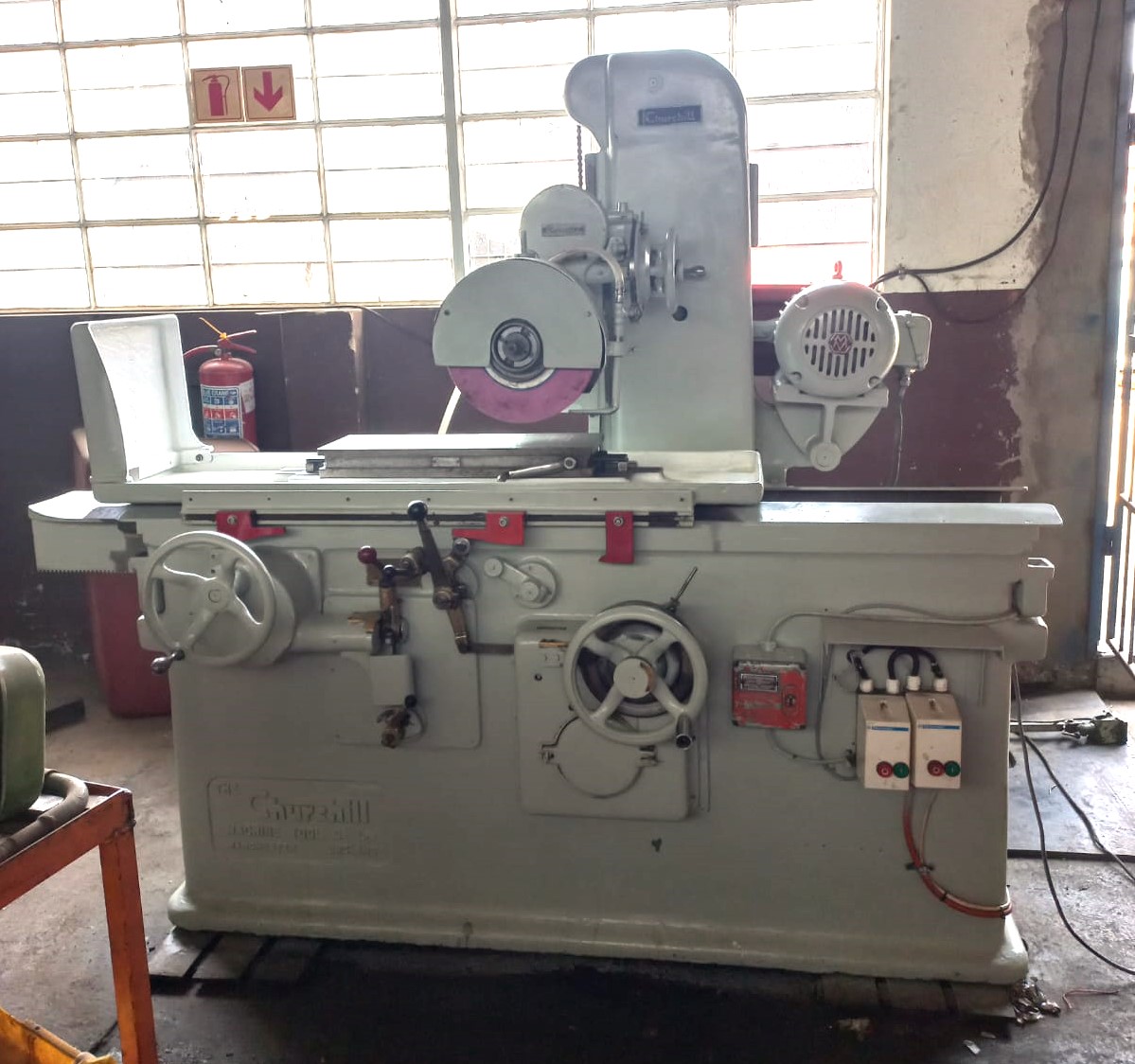
Used Churchill Surface Grinder
A surface grinder is a machine tool used for precision grinding of flat surfaces, typically used to produce a smooth finish on a workpiece. It’s one of the most common machines in the metalworking industry, especially for achieving high-precision flatness and surface finish on parts.
Features of a Surface Grinder:
- Grinding Wheel:
- The grinding wheel is the primary cutting tool on a surface grinder, and it can be made from different abrasive materials like aluminum oxide, silicon carbide, or diamond, depending on the material being ground.
- The wheel is typically mounted on a spindle that can rotate at very high speeds.
- Worktable:
- The worktable is where the workpiece is placed. In many surface grinders, the table moves longitudinally (back and forth) and transversely (side to side) to expose the workpiece to the grinding wheel.
- The worktable is often equipped with a magnetic chuck for securely holding ferromagnetic workpieces (such as steel) during grinding. Alternatively, clamps or vices may be used for non-magnetic materials.
- Vertical and Horizontal Spindles:
- Vertical Spindle: In this configuration, the grinding wheel is mounted vertically, and the machine is called a “vertical spindle surface grinder.” This setup is ideal for producing fine finishes and precise surfaces on flat or slightly curved surfaces.
- Cross Feed and Longitudinal Feed:
- Cross Feed: The cross feed is the movement of the table from side to side. This allows for the grinding wheel to cover the width of the workpiece.
- Longitudinal Feed: The longitudinal feed is the movement of the table from front to back, allowing the wheel to grind the length of the workpiece.
- These motions, combined with the rotating grinding wheel, allow for precise and uniform material removal.
- Cooling System:
- Grinding generates a lot of heat, and to prevent overheating and damage to the workpiece, surface grinders often include a coolant system. Coolant is sprayed onto the grinding wheel and workpiece to keep temperatures down and flush away grinding debris (swarf).
- Magnetic Chuck:
- For holding ferrous workpieces, a magnetic chuck is often used. It holds the workpiece firmly in place through magnetic force, which simplifies setup and ensures precision during grinding.
Types of Surface Grinders:
- Plain Surface Grinders:
- These are the most common and use a horizontal grinding wheel to grind the surface of the workpiece. The worktable moves in two directions (longitudinal and transverse), and the grinding wheel moves vertically.
- Rotary Surface Grinders:
- Rotary surface grinders have a rotating table. The workpiece is placed on a rotating table that continually moves as the grinding wheel moves over it. This type is often used for grinding small, flat parts and provides a fine surface finish.
- Reciprocating Surface Grinders:
- These machines feature a reciprocating (back-and-forth) worktable that moves along with a vertically adjustable grinding wheel. These machines are typically used for grinding larger, heavier workpieces and producing flat, smooth surfaces.
- CNC Surface Grinders:
- CNC (Computer Numerical Control) surface grinders have automated controls for precise and complex grinding tasks. CNC surface grinders are capable of grinding complex parts and meeting very tight tolerances.
Typical Applications of Surface Grinders:
- Flat Surface Grinding: Removing material to create a smooth, flat surface on a workpiece, commonly used for finishing machine parts, tool surfaces, and mold cavities.
- Precision Machining: Surface grinders are used in industries like aerospace, automotive, and precision engineering, where tight tolerances and fine surface finishes are essential.
- Lapping and Polishing: When combined with fine-grit grinding wheels, surface grinders can achieve high-quality finishes for parts that require polished surfaces.
Advantages of Surface Grinding:
- High Precision: Surface grinders can achieve very fine tolerances and smooth surface finishes, often in the micron range.
- Versatility: They can handle a wide range of materials, including metals, plastics, and composites, and are used in many industries.
- Surface Finish Quality: The use of fine grinding wheels can result in an exceptionally smooth surface, often needed in precision machining, tool-making, and even in parts for scientific applications.
Safety Considerations:
- Eye Protection: Always wear safety glasses or goggles, as grinding operations generate a lot of debris and sparks.
- Proper Workpiece Setup: Ensure that the workpiece is securely held in place, either with a magnetic chuck or clamps, to prevent it from shifting during grinding.
- Machine Guards: Ensure that all safety shields and guards are in place before operating the machine.
- Cooling: Always use proper coolant or lubrication to prevent the workpiece and grinding wheel from overheating.
Conclusion:
A surface grinder is an essential machine tool for achieving smooth, flat, and precise surfaces on a variety of materials. They are used extensively in toolmaking, automotive, aerospace, and many other precision industries.


